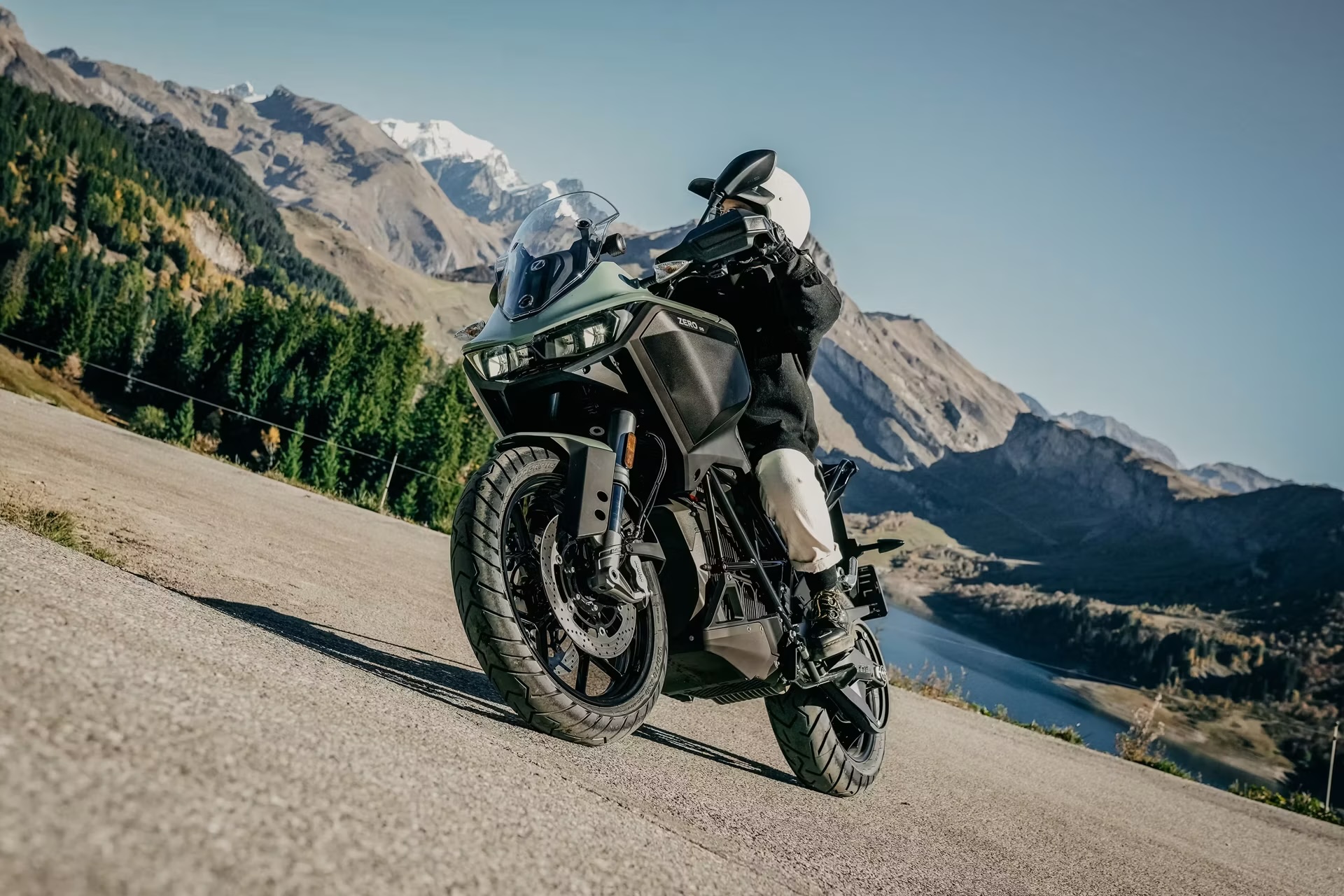
Zero Motorcycles with CCS Starting in 2027: From 20 to 80 Percent in Under 30 Minutes
For many, this has long been the biggest question mark surrounding electric motorcycles: charging on the go. Zero Motorcycles is now addressing this issue in a way that applies not only to new bikes but also to those already sold. In early September 2026, the manufacturer announced in Amsterdam that it would equip its Street and Dual-Sport models with CCS DC fast charging starting in 2027. This is more than just a technical detail—it changes where and how quickly you can charge your Zero motorcycle.
We’ve summarized the key points for you and provided an honest assessment of what’s already been decided and what’s still up in the air.
What’s New?
Until now, the affected Zero models have come standard with 6.6 kW AC charging (Type 2); as an option, this could be upgraded to 12.6 kW via the so-called Rapid Charge System. Now, charging via a CCS connector is being added—the same direct current standard that electric cars use at large fast-charging stations. Key specifications according to Zero:
- From 20 to 80 percent in less than 30 minutes for batteries with a capacity of up to 17.3 kWh.
- Retrofit available starting with the 2022 model year: planned for the S, SR, SR/S, SR/F, DS, DSR, and DSR/X series—each equipped with the Cypher III operating system.
- Type 2 charging remains: The standard 6.6 kW AC charging won’t be going away; CCS is being added as an additional option.
Zero itself does not specify a kilowatt rating for the new module. If you do the math based on the provided data, you end up with roughly 21 kW—about twice that of the previous Rapid Charge system. This figure is an estimate based on the manufacturer’s specifications; it is not an official figure.
Why the type of plug is almost more important than the minutes
Cutting charging time in half sounds good, but the real progress lies elsewhere: in access to the charging infrastructure. CCS fast chargers are now densely located along major transportation routes, and new charging stations are almost exclusively being built with CCS. This means that in the future, a Zero driver will be able to access significantly more charging stations overall.
There’s also a practical consideration: At a Type 2 charging station, you have to bring your own cable, whereas with CCS, the cable is permanently attached to the station. On a longer trip, this eliminates the need for bulky luggage. Especially for travel-ready models like the SR/F, SR/S, and DSR/X, this noticeably shifts their potential uses from being purely everyday vehicles to becoming true touring companions.
The real highlight: existing motorcycles benefit as well
What’s remarkable about the announcement isn’t the year 2027, but the word “retrofit.” Manufacturers usually draw a strict line between new technology and the latest generation—those who have already purchased a device get left out in the cold. Zero is taking the opposite approach here and is including the third generation that has already been sold (starting with the 2022 model year, featuring Cypher III).
For you as the owner, this means that a 2022 model or later can benefit from technology that didn’t even exist when you bought it. This can also have a positive effect on retaining value —a used Zero with CCS capability is simply more attractive on the market. Incidentally, Cypher III is the reason why the distinction is so clear: Zero has been using this software and electronics platform since 2022 to control riding modes, performance, and, of course, charging. Older models without Cypher III are excluded.
What’s Still Up in the Air
So much for the good news; now for an honest assessment. A few things are still unclear:
- Price: Zero has not provided a figure. As a rough guide: Previous optional extras (Rapid Charge System, auxiliary battery) cost around 3,500 euros, depending on the model. Since the CCS module technically replaces them, the price could be in a similar range—though this has not been confirmed.
- Date: “Sometime in 2027”—no specific quarter or model year is given.
- Which batteries exactly: The phrasing “up to 17.3 kWh” leaves room for interpretation. In some configurations, the usable capacity is limited by software; Zero plans to announce later which variants will be available.
In short: We’re heading in the right direction; the details are still to come. When making a purchase decision today, this means, above all, factoring in CCS capability as a welcome bonus, but not counting on a specific date or price.
Conclusion
With CCS, Zero is taking a step that makes electric motorcycles more suitable for everyday use and travel, while treating existing riders fairly rather than just catering to new customers. Exactly when this will be available and how much the retrofit will cost remains to be seen. One thing is clear: charging is no longer Zero’s biggest hurdle.
Do you ride a Zero or are you thinking about getting one? If so, it’s worth taking a look at the current model lineup and talking to us as soon as specific information about retrofitting becomes available. We’ll keep you posted.