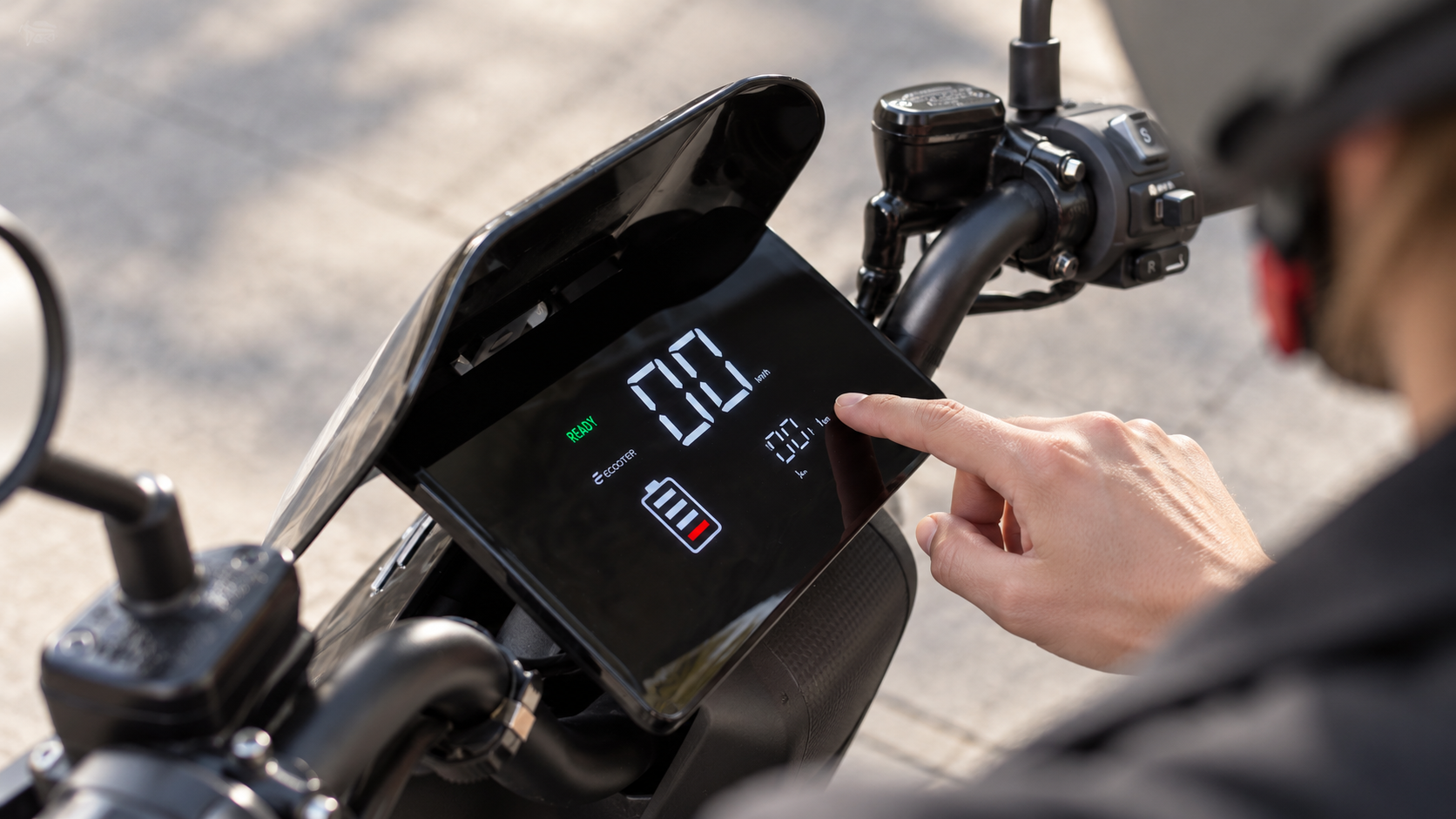
Is an e-scooter enough for my commute? Here’s how to figure it out
“What if my e-scooter breaks down while I’m out and about?” It’s the question that deters many people from buying an e-scooter even before they consider the brand, price, or design. The concern is understandable: No one wants to be stranded on the side of the road with a dead battery on their way to work in the morning.
The good news: You don’t have to guess whether an e-scooter is enough for your commute—you can figure it out. And we’ll do it using numbers you’re already familiar with. Here, we’ll show you the honest way to do the math—without any marketing hype.
Why Catalog Reach Isn’t the Real Reach
First things first: The range listed on the spec sheet (usually based on the WMTC standard) is a lab figure measured under ideal conditions —constant speed, mild weather, flat terrain, and a fully charged battery. Your everyday life is different. Cold temperatures, hills, brisk riding, and a load all noticeably reduce the actual range.
Especially in winter: When temperatures are around freezing, the range can drop by about 20 to 30 percent. This isn’t a defect—it’s simply physics. When temperatures rise, the full range returns. The key thing is this: factor in this reduction from the start, rather than relying on the catalog figure.
These factors chip away at the range in everyday use:
- Cold: the biggest single factor in winter.
- Uphill climbs: If you have to climb a hill every day, you burn more calories.
- Pace: Swimming at full speed the entire time takes noticeably more effort than maintaining a steady pace.
- Payload: Luggage, passenger, heavy backpack.
- Battery age: After a few years, the capacity gradually decreases.
No need to worry—you just need to be aware of these points and plan accordingly. That’s exactly what the following calculation method does.
Here’s how to calculate your actual needs: in 3 steps
You don’t need any tools or a formula book for this—just your actual distance.
Step 1 – Your Daily Commute: Simply measure your commute (Google Maps will do) and add up the round trip. The Swiss average is 13.7 km each way—so about 27 km a day.
Step 2 – Factor in detours: Everyday life rarely follows a straight line. The route to daycare, picking up groceries on the way home, a small detour due to the weather—add a few kilometers generously.
Step 3 – Plan for winter reserve: Take a model’s WMTC rating and generously subtract one-third to account for cold weather, topography, and battery age. The remainder is your realistic everyday range. If you want to play it safe, it’s better to plan for a little more reserve—a battery that is rarely drained completely will also last longer.
Rule of thumb: Daily range = (distance × 2) + detours. Also: When buying, it’s better to plan for a little extra range rather than optimizing exactly for today’s route.
A real-world example
Let’s say your commute to work is 12 km one way, so 24 km round trip. With a few detours, you’ll end up with a realistic daily distance of about 30 km.
A model with a 120 km WMTC range loses, at a generous estimate, one-third of that in the winter—leaving about 80 km in real-world driving. Even then, you can still drive your 30 km daily for several days without having to charge it every evening. In short: For the typical Swiss commute, range is far less of an issue with most models than concerns might suggest—you just have to do the math honestly. (You can find the specific figures for your desired model in the spec sheet or clarify them during a consultation.)
What if things do get tight?
For long distances or frequent riders, there are two simple solutions. First, the removable battery: Many modern e-scooters have a removable battery that you can charge at home using a standard outlet—convenient for anyone without their own garage. Some models can even accommodate a second battery, effectively doubling the range. Second, charging at work: Even a standard outlet during the workday significantly extends your range—your scooter charges while you’re at the office anyway.
And honestly: For the vast majority of commutes, you don’t need either. It’s the exception rather than the rule for a commute to really push a modern e-scooter to its limit.
Reach isn’t everything, but it’s a good place to start
Ultimately, the choice depends not only on mileage, but also on your driver’s license, budget, and charging options—you can find a complete overview of all these factors in our Cornerstone guide to choosing a model. However, range is often the biggest concern. Once you’ve calculated it for your own commute, you’ll be able to make the rest of the decision with much greater peace of mind.
Conclusion: Math beats gut feelings
Range anxiety almost always disappears as soon as you start working with real numbers: your usual distance multiplied by two, plus detours, compared to the realistic range with a winter reserve. Most of the time, it quickly becomes clear that everyday driving is easily within the range.
And if you want to know exactly: Let’s work through the numbers together—we’ll figure out what range you really need and which models are a good fit. 🔋
Until then: Have a safe ride! 🛵
→ Experience the range firsthand—book a test drive now

